
What do the symbols on electronics packaging mean?

If you’ve ever looked closely at an electronics box, you’ve probably noticed a collection of icons printed alongside product information. These symbols do much more than decorate packaging. They provide guidance on shipping, product safety, regulatory compliance, recycling, and end-of-life disposal.
Because electronic devices often contain sensitive components, batteries, and market-specific certifications, their packaging typically carries more symbols than most retail products. Some icons help logistics providers handle products correctly, while others communicate legal requirements or environmental responsibilities.
Whether you’re a brand owner preparing products for market or a consumer trying to understand what’s printed on a box, knowing what these symbols represent can make packaging easier to interpret.
Key takeaways
- Electronics packaging combines handling, compliance, environmental, and battery-related symbols.
- Certain symbols help prevent damage during shipping and storage.
- Regulatory marks indicate that products meet requirements in specific regions.
- Recycling and disposal symbols help reduce environmental impact.
- Different electronics categories may require different symbol combinations.
- Understanding these markings can improve compliance, customer communication, and sustainability efforts.
Why electronics products use so many packaging symbols

Unlike many consumer goods, electronics must communicate information to several audiences at the same time.
A warehouse worker may need instructions on how to handle a package. Regulators may look for compliance markings before a product can be sold. Consumers need guidance on recycling packaging materials and disposing of batteries properly.
As a result, a single electronics package often includes symbols from multiple categories:
- Handling and shipping symbols
- Regulatory and compliance marks
- Recycling and environmental symbols
- Battery safety and disposal markings
Together, these icons create a standardized visual language that helps products move safely through the supply chain while meeting legal and environmental requirements.
Shipping and handling symbols

Electronic devices can be sensitive to impact, moisture, and improper storage conditions. To reduce the risk of damage during transportation, manufacturers frequently include handling symbols on shipping cartons and retail packaging.
Common examples include:
- Fragile
- Handle With Care
- This Side Up
- Keep Dry
These symbols alert carriers, warehouse personnel, and fulfillment teams to specific handling requirements throughout the shipping process.
While symbols provide important guidance, they work best when paired with protective packaging solutions such as corrugated boxes, foam inserts, cushioning materials, and anti-static protection.
Regulatory and compliance marks
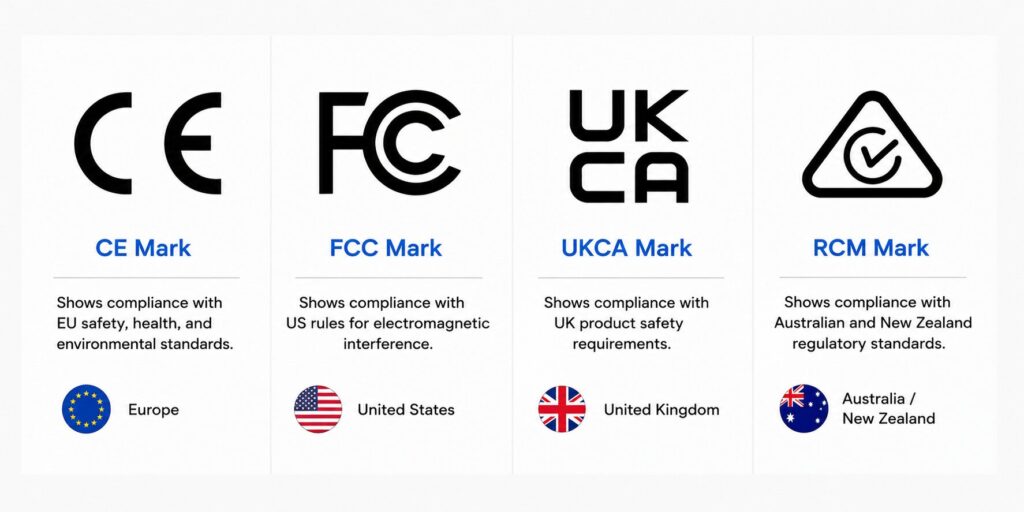
Many electronic products must satisfy regulatory requirements before entering specific markets. Compliance symbols communicate that a product has been evaluated according to applicable standards.
Frequently used marks include:
- CE Mark – Meets applicable European safety and compliance requirements.
- FCC Mark – Complies with U.S. electronic communication and interference regulations.
- UKCA Mark – Meets regulatory requirements for products sold in Great Britain.
- Industry-specific certification symbols
Although these icons appear small, they often represent extensive testing and documentation processes related to product safety, electromagnetic compatibility, and environmental regulations.
Depending on the market, compliance marks may appear on product packaging, labels, user manuals, or technical documentation.
Recycling and environmental symbols
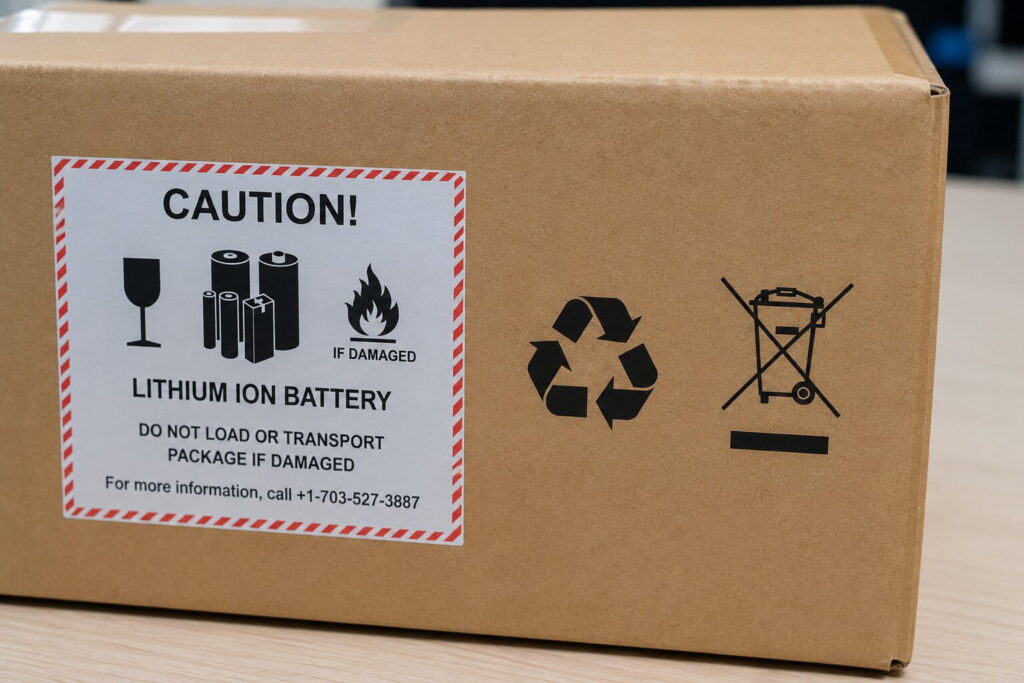
Environmental markings help consumers understand how products and packaging should be disposed of once they reach the end of their useful life.
One of the most recognized examples is the WEEE symbol, shown as a crossed-out wheeled bin. This symbol indicates that electronic devices should be collected separately from standard household waste.
Other common environmental symbols include:
- WEEE Symbol
- Mobius Loop – The universal recycling symbol. It generally indicates that packaging can be recycled or contains recyclable materials.
- Battery recycling symbols – Battery should be recycled through appropriate collection programs.
- Material identification codes – Identifies the material type to support recycling and waste sorting.
Although these symbols are often grouped together, each serves a different purpose, from identifying recyclable packaging materials to directing consumers toward appropriate disposal programs.
Battery disposal and safety symbols
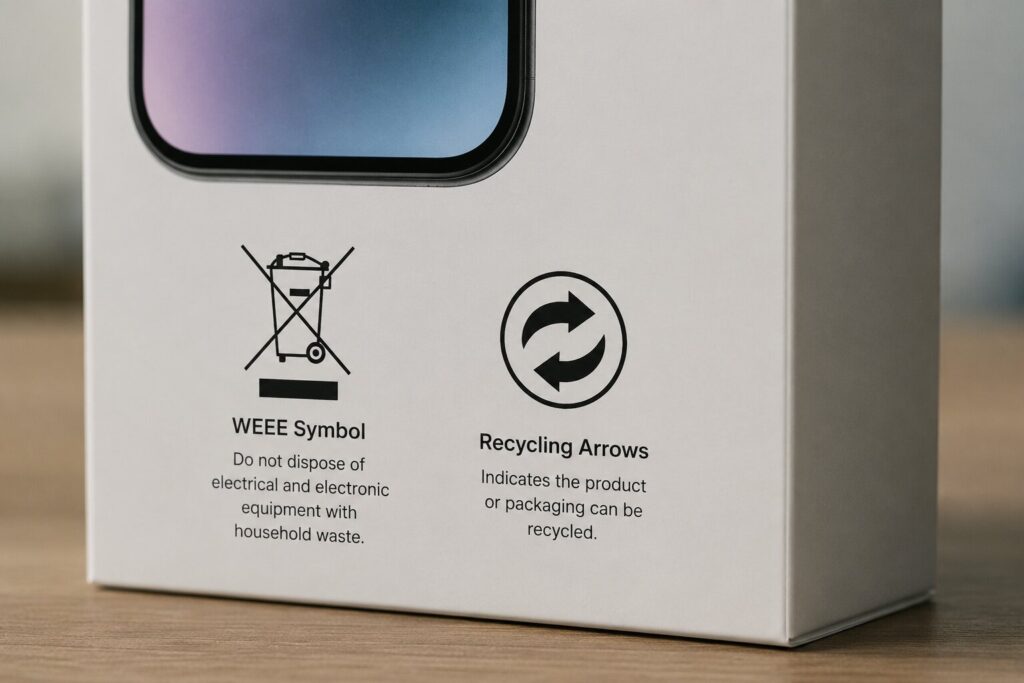
Battery-powered electronics often require additional markings because batteries are subject to specialized recycling, transportation, and disposal requirements.
Common battery-related symbols include:
- Battery recycling symbols
- Lithium battery markings
- Separate collection symbols
These icons are commonly found on:
- Smartphones
- Tablets
- Laptops
- Wireless peripherals
- Rechargeable consumer electronics
For manufacturers, battery markings support regulatory compliance and safety communication. For consumers, they provide clear instructions on how batteries should be handled after use.
Symbol requirements vary by product type
The combination of symbols found on a package depends on several factors, including the product category, battery type, shipping needs, and intended market.
For example, smartphones and tablets often feature compliance marks, battery disposal symbols, WEEE markings, and recycling information. Industrial electronics may include additional safety and certification symbols, while simple accessories may only require basic compliance and recycling icons.
As products become more complex and are sold across multiple regions, the number of required symbols typically increases.
In Summary
The symbols printed on electronics packaging serve a much larger purpose than many people realize. They help protect products during transit, demonstrate regulatory compliance, support environmental initiatives, and provide important information throughout a product’s lifecycle.
By understanding what these symbols represent, businesses can improve packaging accuracy and compliance, while consumers can make more informed decisions about product handling, recycling, and disposal.