
Packaging symbol placement: Making sure the right people see the right information

Packaging symbols are only effective when they’re easy to find. Whether it’s a handling instruction for a shipping carrier or a recycling mark for a consumer, proper placement helps ensure the symbol communicates its message at the moment it’s needed.
Different symbols serve different purposes throughout a package’s lifecycle. Some are intended for warehouse teams and delivery personnel, while others are meant for shoppers, retailers, or regulatory agencies. Because of this, symbol placement should be determined by who needs the information and when they need to access it.
For example, handling symbols such as Fragile or This Side Up are typically displayed on the exterior of shipping cartons where they remain visible during transportation. In contrast, recycling labels, sustainability certifications, and compliance marks are often located on secondary packaging panels alongside product details and legal information.
A symbol that’s hidden beneath a shipping label, folded into a package seam, or obscured by tape can easily be overlooked. Strategic placement helps maximize visibility and improves the effectiveness of packaging communication.
Key takeaways
- Packaging symbols should be positioned based on their intended audience.
- Shipping and handling icons belong where logistics personnel can quickly identify them.
- Recycling and sustainability marks are commonly placed on secondary packaging panels.
- Compliance symbols are typically grouped with product information and regulatory details.
- Visibility can be compromised by labels, closures, folds, or other packaging elements.
- Effective symbols are easy to locate and understand throughout the product journey.
Quick reference: Recommended placement by symbol type
| Symbol Category | Common examples | Recommended location | Primary audience |
| Shipping and handling | Fragile, This Side Up, Keep Dry, Handle With Care | Exterior shipping carton, preferably on more than one side | Carriers, warehouse personnel |
| Recycling | Mobius Loop, Resin Identification Codes | Side, back, or bottom packaging panels | Consumers, recycling facilities |
| Sustainability | FSC, How2Recycle, Compostable Certifications | Near environmental claims or product information | Consumers |
| Product Safety | Warning symbols, electrical safety marks | Close to instructions, warnings, or specifications | Consumers, service personnel |
| Compliance and regulatory | CE, UKCA, WEEE, industry certifications | Product information section or back panel | Retailers, regulators, consumers |
| Storage and transportation | Temperature-sensitive, Moisture Protection | Shipping and transport packaging | Logistics and storage teams |
Start with the audience
There is no universal placement rule that applies to every packaging symbol.
Instead, the most effective approach is to identify who needs the information and design around that user. A consumer looking for recycling guidance interacts with packaging differently than a warehouse worker scanning a pallet for handling instructions.
By understanding the audience first, brands can make informed decisions about where symbols should appear for maximum visibility and usefulness.
Placement guidelines by symbol category
The following guidelines outline the recommended placement for each symbol category to ensure visibility, consistency, and effective communication.
Shipping and handling symbols

Examples:
- Fragile
- This Side Up
- Handle With Care
- Keep Dry
These symbols support transportation and storage activities, making visibility a top priority.
They should be placed on the outer shipping carton where they can be quickly identified during receiving, storage, and delivery. Large packages often benefit from displaying handling symbols on multiple sides to ensure they remain visible regardless of orientation.
Avoid positioning these symbols beneath shipping labels, packing tape, stretch wrap, or other elements that may obscure them during transit.
Recycling symbols

Examples:
- Mobius Loop
- Plastic Resin Codes
- How2Recycle Labels
Recycling symbols are most relevant after the package has been opened and is ready for disposal.
Because consumers often look for disposal guidance alongside product details, these symbols are typically placed on side panels, back panels, or the bottom of the package. This keeps them accessible without competing with key branding and marketing elements on the front panel.
Sustainability certifications

Examples:
- FSC Certification
- Compostable Certifications
- Recycled Content Claims
Environmental certifications help communicate the sustainability attributes of packaging materials.
These symbols are commonly grouped with recycling information, sustainability statements, or product specifications. Keeping related information together creates a more intuitive experience and makes environmental claims easier for consumers to verify.
For brands using custom packaging, sustainability certifications can also reinforce broader environmental initiatives and provide guidance on responsible disposal.
Regulatory and compliance symbols
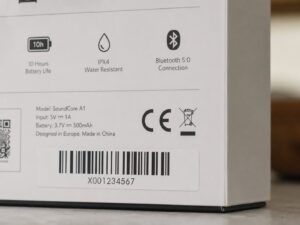
Examples:
- CE Mark
- UKCA Mark
- WEEE Symbol
Compliance marks are generally positioned alongside manufacturer information, technical specifications, and legal disclosures.
Unlike shipping symbols, these marks are not designed for visibility at a distance. Instead, they should be placed in locations where retailers, inspectors, and consumers expect to find regulatory information. Consistency and clarity are often more important than prominence.
Best practices for symbol placement
To improve visibility across retail, shipping, and post-consumer environments:
- Place symbols according to the needs of their intended audience.
- Maintain adequate size, spacing, and contrast.
- Keep symbols away from labels, seams, folds, closures, and tape.
- Group related information together whenever possible.
- Consider how the package will be viewed during shipping, storage, display, and disposal.
- Review prototypes and mockups from multiple angles before production.
Packaging symbols help communicate critical information throughout a product’s lifecycle, from transportation and storage to consumer use and disposal.
Choosing the correct symbol is only part of the equation. Placement determines whether that information is actually seen by the people who need it. By aligning symbol placement with user expectations and package functionality, brands can improve handling efficiency, support compliance requirements, and provide a better overall customer experience.