
Understanding the five main types of packaging symbols

Packaging symbols may look simple, but each on carries a specific meaning. Some tell shipping carriers how to handle packages correctly. Others communicate safety risks, environmental information, or regulatory requirements.
Rather than viewing packaging symbols as a long list of icons to memorize, it helps to organize them by category. Each category has a clear purpose, and once you understand that purpose, choosing the right symbols for your packaging becomes much more straightforward.
Key Takeaways
- Most packaging symbols fall into five major categories.
- Different symbols are intended for different audiences, including carriers, warehouse teams, consumers, and regulators.
- A single package often contains symbols from multiple categories.
- Some symbols are legally required, while others are used to improve communication and reduce risk.
- Choosing the right symbols depends on your product, packaging format, distribution method, and market requirements.
The five categories of packaging symbols at a glance
| Category | Primary Function | Common Examples |
| Handling Symbols | Guide transportation and movement | Fragile, Handle With Care, This Side Up |
| Storage Symbols | Communicate environmental requirements | Keep Dry, Temperature Sensitive |
| Safety Symbols | Alert users to potential hazards | Flammable, Food Safe, Warning Symbols |
| Compliance Symbols | Demonstrate regulatory conformity | CE, UKCA, WEEE |
| Recycling & Sustainability Symbols | Provide disposal and environmental information | Mobius Loop, FSC, How2Recycle |
1. Handling Symbols: Protecting Products During Transit
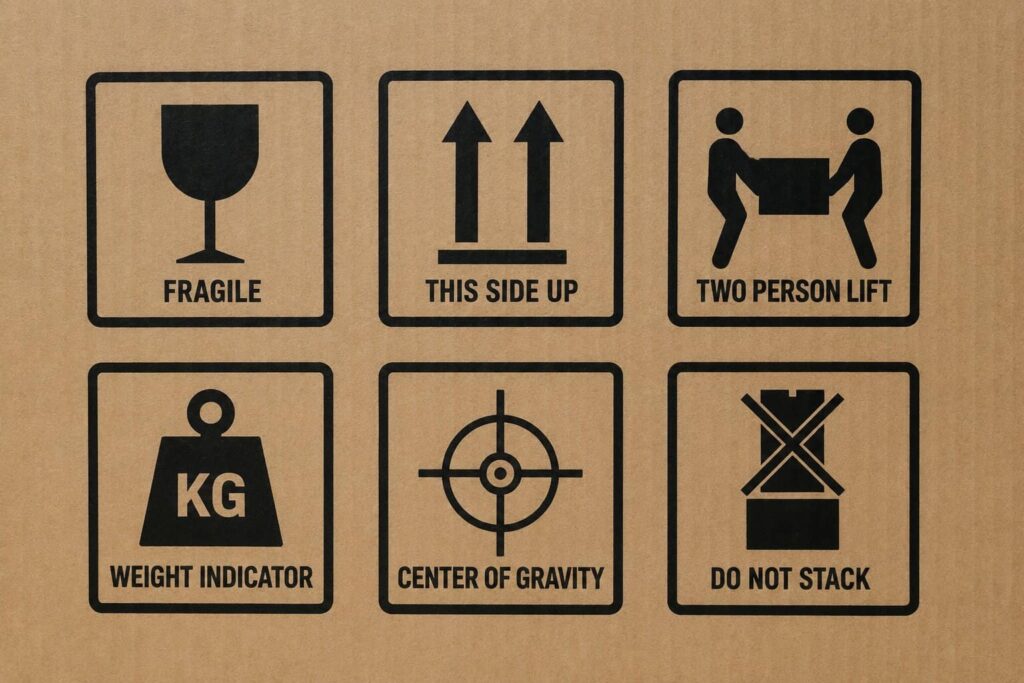
Handling symbols are designed to reduce shipping damage by communicating how packages should be moved, lifted, stacked, or positioned.
These symbols are especially useful for products that can be damaged by impact, pressure, tipping, or improper handling.
Common Applications
| Product | Typical Symbols |
| Glass bottles | Fragile, This Side Up |
| Consumer electronics | Fragile, Handle With Care |
| Large appliances | Two-Person Lift, Use Trolley |
| Industrial equipment | Weight Indicator, Center of Gravity |
| Palletized shipments | Do Not Stack, Stack Limit |
While handling symbols can influence how a package is treated, they don’t replace protective packaging. Corrugated boxes, cushioning materials, inserts, and transit-tested packaging designs remain the first line of defense.
You’ll most often see handling symbols on shipping cartons, master packs, export packaging, and palletized freight moving through multiple touchpoints.
2. Storage Symbols: Communicating Environmental Conditions
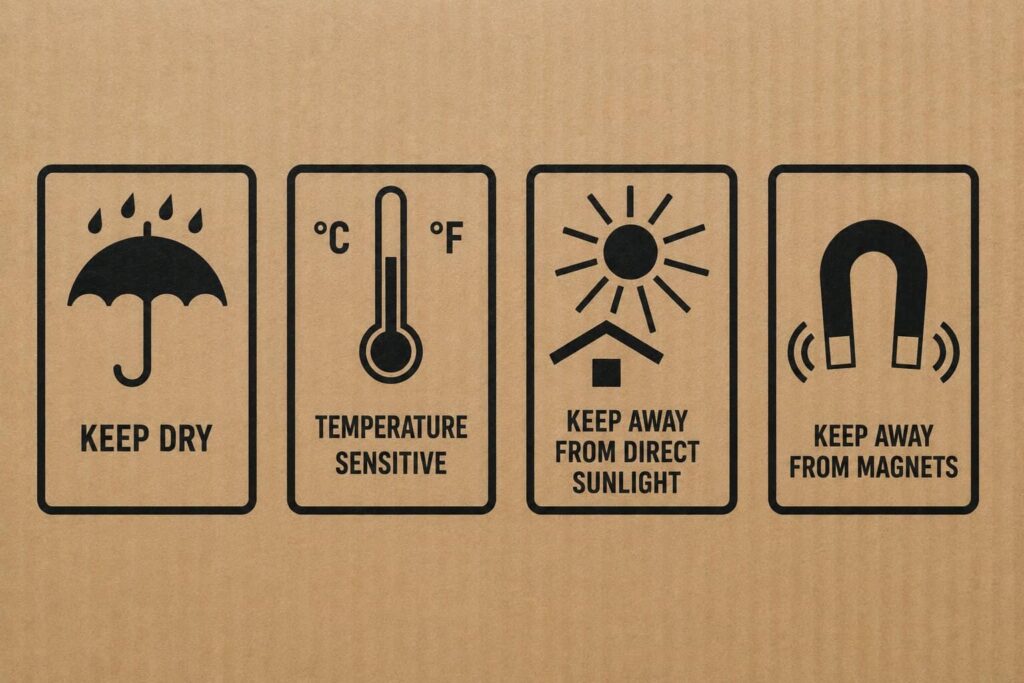
Not every product is vulnerable to rough handling. Many products are more sensitive to their surroundings than to physical movement.
Storage symbols identify environmental conditions that could affect product quality, performance, or safety while in transit or storage.
Common Storage Symbols
- Keep Dry
- Temperature Sensitive
- Keep Away From Direct Sunlight
- Keep Away From Magnets
Where They’re Most Useful
| Product Type | Environmental Concern |
| Electronics | Moisture, magnetic interference |
| Pharmaceuticals | Temperature fluctuations |
| Food products | Heat and light exposure |
| Specialty chemicals | Environmental degradation |
| Printed materials | Moisture and UV damage |
Like handling symbols, storage symbols communicate requirements rather than provide protection themselves. Businesses often pair these symbols with moisture-resistant materials, insulated packaging, UV-resistant components, or temperature-controlled shipping methods.
3. Safety Symbols: Protecting People From Risk
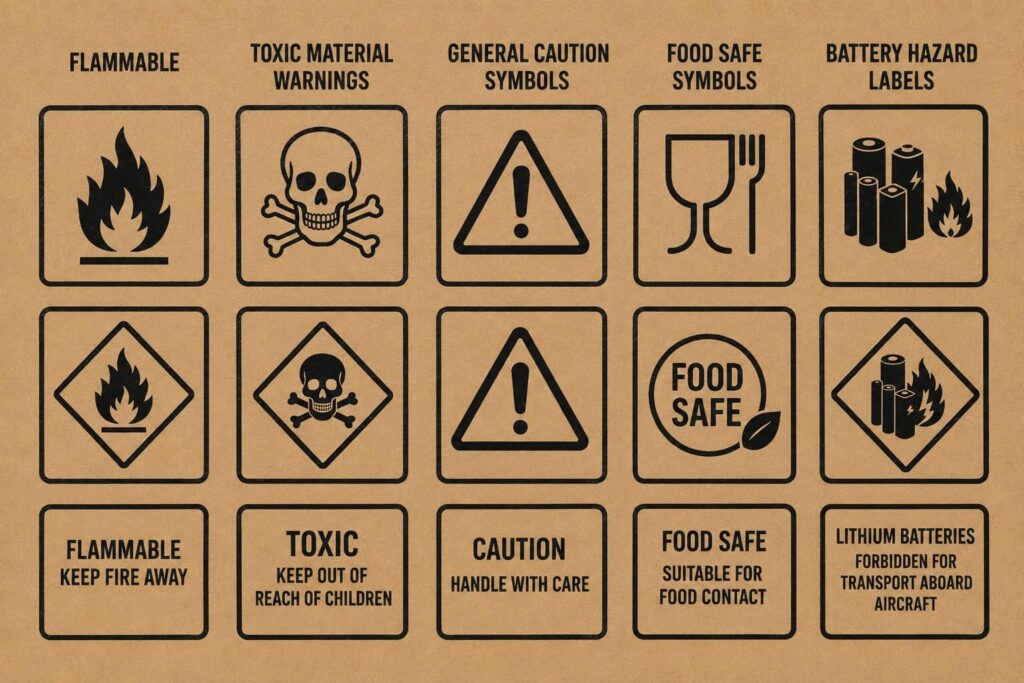
Safety symbols focus on human safety rather than product protection.
Their purpose is to quickly communicate hazards, precautions, or material-specific warnings that users should understand before handling, transporting, storing, or opening a package.
Examples of Safety Symbols
- Flammable
- Toxic Material Warnings
- General Caution Symbols
- Food Safe Symbols
- Battery Hazard Labels
Typical Use Cases
| Product | Potential Hazard |
| Aerosols | Fire risk |
| Batteries | Chemical leakage or combustion |
| Cleaning products | Chemical exposure |
| Food packaging | Material suitability |
| Industrial chemicals | Health and environmental hazards |
Many safety symbols are tied to workplace safety standards, transportation regulations, or industry-specific requirements. They often work alongside warning labels, safety instructions, and product documentation to provide a complete picture of potential risks.
4. Compliance Symbols: Demonstrating Regulatory Requirements
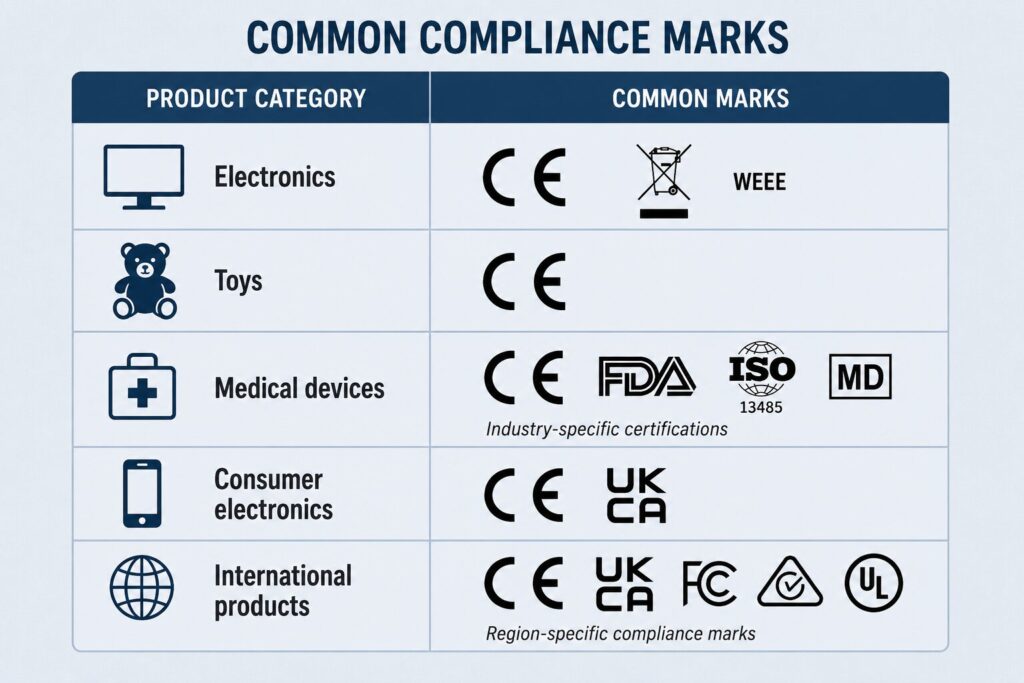
Compliance symbols show that a product meets specific standards, regulations, certifications, or market-entry requirements.
Unlike handling or safety symbols, their primary purpose isn’t communication during shipping. Instead, they help demonstrate that products satisfy legal or industry expectations.
Common Compliance Marks
- CE Mark
- UKCA Mark
- WEEE Symbol
- Product certification marks
- Industry-specific compliance labels
Products That Frequently Require Compliance Symbols
| Product Category | Common Marks |
| Electronics | CE, WEEE |
| Toys | CE |
| Medical devices | Industry-specific certifications |
| Consumer electronics | CE, UKCA |
| International products | Region-specific compliance marks |
It’s important to remember that compliance symbols are the result of testing, certification, documentation, or regulatory review. Simply adding a mark to packaging does not make a product compliant.
5. Recycling and Sustainability Symbols: Supporting Responsible Disposal
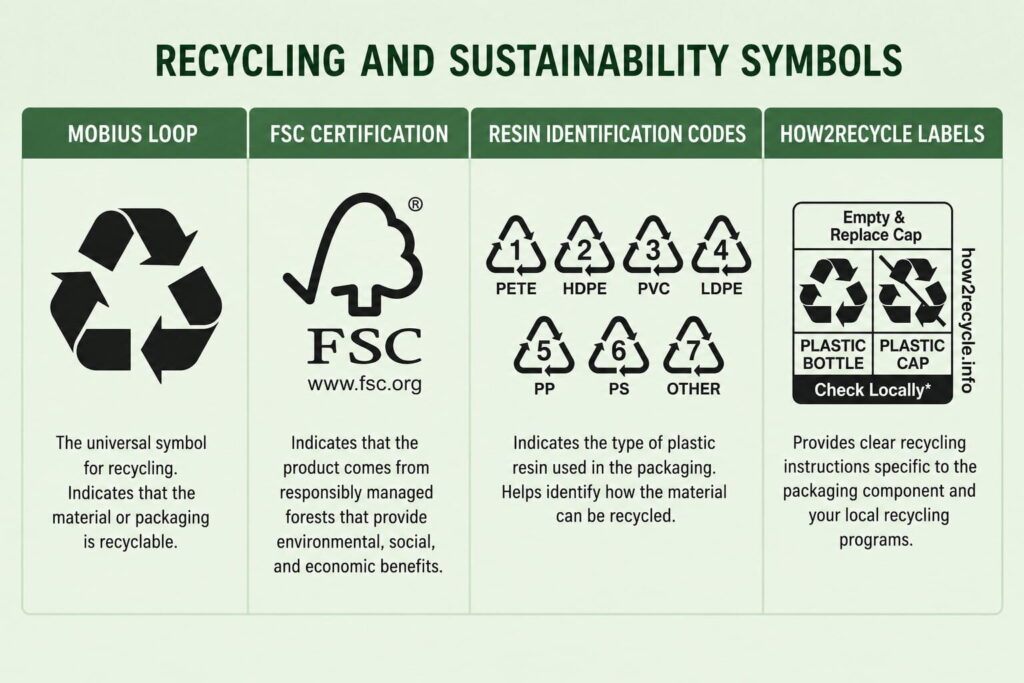
After a package reaches its destination, another set of symbols becomes important.
Recycling and sustainability symbols help consumers understand what materials were used, how packaging should be disposed of, and whether certain environmental standards have been met.
Frequently Used Symbols
- Mobius Loop
- FSC Certification
- Resin Identification Codes
- How2Recycle Labels
What These Symbols Tell Consumers
| Question | Symbol Example |
| Can this be recycled? | Mobius Loop |
| What material is it made from? | Resin Identification Code |
| Was it responsibly sourced? | FSC Certification |
| How should each component be disposed of? | How2Recycle
|
Although these symbols are often grouped together, they communicate different information. A package made from recyclable material, for example, may not necessarily be accepted by every local recycling program.
For brands, these symbols can improve transparency, support sustainability initiatives, and help consumers make more informed disposal decisions.
Choosing the right symbols for your packaging
The most effective packaging doesn’t use every symbol available—it uses the symbols that provide the most useful information to the people interacting with the package.
Before selecting symbols, consider:
- Who will handle the package?
- Does the product require special storage conditions?
- Are there safety concerns that need to be communicated?
- Do regulatory requirements apply?
- Will consumers benefit from disposal or sustainability guidance?
Answering these questions can help narrow down which categories are most relevant to your packaging.
Once you’ve selected the right symbols, placement matters just as much as the symbols themselves. A handling or recycling mark can’t do its job if nobody sees it. Learn more in our guide: Packaging symbol placement: Making sure the right people see the right information
Final thoughts
Packaging symbols are more than visual elements printed on a box. They serve as communication tools that help products move safely through supply chains, comply with regulations, and provide useful information to end users.
By understanding the five primary categories—handling, storage, safety, compliance, and sustainability—businesses can make more informed decisions about which symbols belong on their packaging and how those symbols support the customer experience.